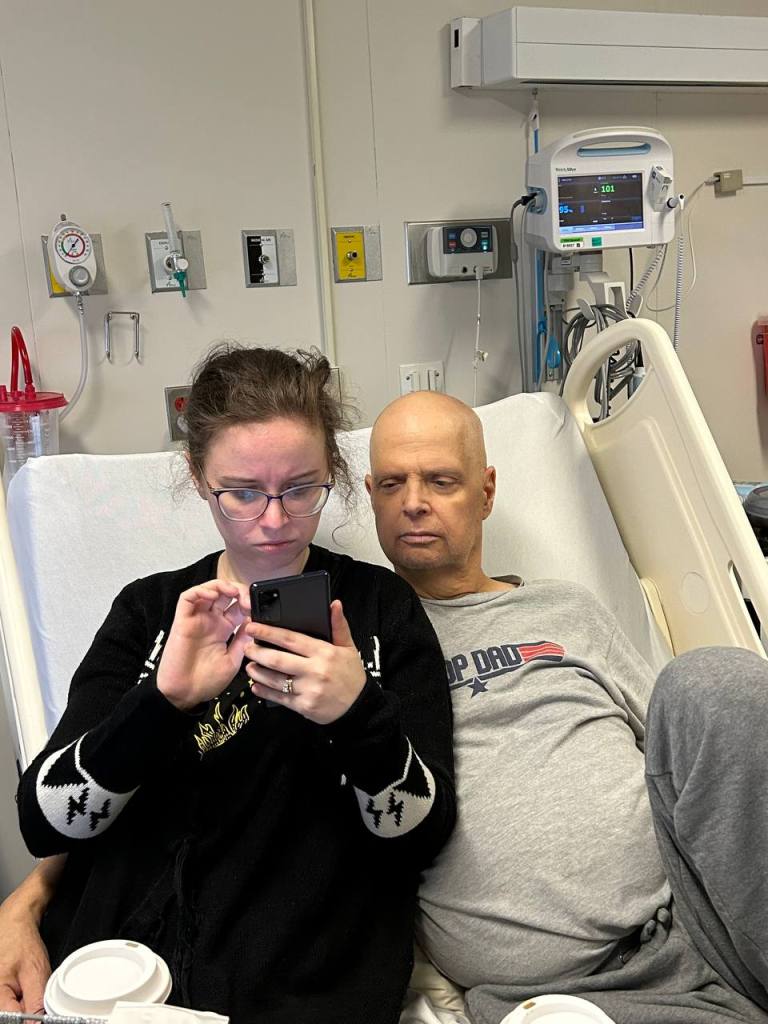
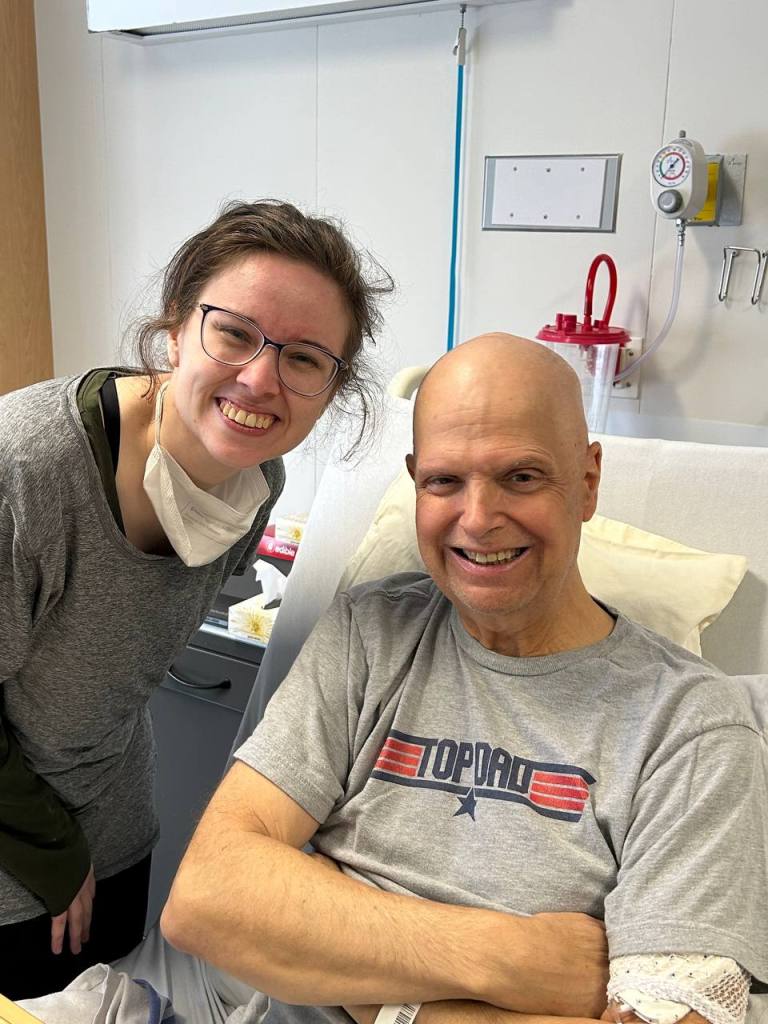
I am back in hospital and have been here for just over three weeks. Why? Graft vs. Host Disease (GVHD) reared its ugly just after T+100. I encourage you to take a few minutes to read a previous blog post that explains GVHD in more detail.
As I mentioned in the blog post, acute GVHD seems to favour three organs: skin, gastrointestinal (GI) track, and liver. In my case, up to day 100, I had very, very mild skin GVHD. Just after T+100, I felt like someone threw a switch and, within a week, was dealing both skin and GI GVHD.
The skin GVHD was easily treated with steroids. The GI GVHD, on the other hand, is more challenging to treat. Hospitalization is necessary as constant monitoring and adjustments to medications is required.
In addition to the medications used to treat the GI tract GVHD, dietary limitations are also part of the treatment. Currently, I am allowed clear fluids (broth, clear juices, ginger ale) and plain starches (rice, mashed potatoes, past). Oh, I can also have apple sauce.
I’m working on a more blog post with more details, including a description of the plan to get me back home.
Having found myself back in hospital, I had barely woken up on my first morning to hear the nurse telling me, “You tested positive COVID.” I was stunned. All I could think was “ARE YOU KIDDING ME ??!!)
This latest hospital journey started on T+51 (18 January 2024). After a busy morning of hospital visits and prescription refills, I was tired and napped most of the afternoon. I wasn’t particularly hungry for dinner and just felt “off”; something wasn’t quite right.
I continued to feel “off” on T+52 (19 January 2024), with the feeling growing progressively worse during the day. I didn’t do too much that day. Tracy and I hung out and watched TV shows that we had recorded.
Friday evening my temperature started to climb. Due to the extreme risk of infection, The Ottawa Hospital Transplantation and Cellular Therapy (TCT) program insists that patients live within a one hour drive of the hospital; apparently infections can go from “0 to 60” that quickly for stem cell transplant patients. The protocol that patients are asked to follow is to call the program (someone is available 7 X 24) if their temperature exceeds 38C for more than an hour.
Throughout Friday evening my temperature increased steadily and was 37.8C when I went to bed. I woke up around 1am feeling warm and took my temperature. It was 38.1C. I continued take periodic readings for about 40 minutes and, when I realized that my temperature was not decreasing, I woke Tracy and asked her to call the TCT program.
The hematologist on-call instructed us to head to the hospital’s emergency department for an assessment. Very fortunately, we arrived during a lull in activity and I was admitted for observation without an overly long wait. I spent that next 15 hours in the observation area of the emergency department (which at The Ottawa Hospital consists of approximately 2 dozen beds) undergoing a series of tests and, in between tests, waiting.
After a few miscommunications with the team on 5 West, the hematology resident finally made her way to the emergency department and, in consultation with the emergency room staff, determined that I should be admitted, at least overnight. The next morning I learned that I had tested positive for COVID.
Because I am considered at high risk of complications from COVID, I qualified for intravenous remdesivir treatment. According the MedLine Plus web site, “Remdesivir is in a class of medications called antivirals. It works by stopping the virus from spreading in the body.” It is used “to treat coronavirus disease 2019 (COVID-19 infection) caused by the SARS-CoV-2 virus in hospitalized adults”.
I stayed in hospital for a week and was discharged on T+59 (26 January 2024). I was fortunate to get on the Remdesivir treatment quickly before the virus spread to my lungs or gastrointestinal tract. Other than the fever, a mild sore throat, and a splitting headache, I had no other other symptoms. The symptoms that I did have disappeared within 48 hours of the start of Remdesivir treatment.
I am finally feeling “human” again and able to get back to light physical activities around the house, reading, and blogging. I have been kicking around a few ideas for future posts in my head and hope to publish at least one of them this week.
Most people are familiar with the concept of organ rejection as a key concern with organ transplants. This rejection is caused by the immune system of the recipient treating the donor organ as a foreign body and attacking it. Consequently, most organ transplant recipients end up taking immunosuppressant drugs for the rest of their lives to prevent organ rejection.
In the case of a bone marrow stem cell transplant like I had, the donor’s immune system replaces the recipient’s immune system (which was purposely destroyed through chemotherapy). Hence, my organs are now the foreign bodies and are subject to attack by my new immune system. This attack is known as Graft vs. Host Disease (GVHD).
There are two forms of GVHD:
Acute. Generally occurs within the first 100 days post transfer of stem cells from the donor to the recipient. Organs most often affected are the skin, gastrointestinal tract, and liver. While the impact can range from mild to severe, the duration is finite. Estimates vary but somewhere between 30% and 70% of recipients develop acute GVHD.
Chronic. Can occur at any time but generally manifests at least 100 days post transfer of stem cells from the donor to the recipient. In addition to the organs affected by Acute GVHD, Chronic GVHD can also affect eyes, mouth, nails, scalp and body hair, lungs, muscles and joints, and genitals and sex organs. As with Acute GVHD, the impact can range from mild to life threatening. Unlike Acute, GVHD, the duration is measured in years and can even persist for the remainder of the recipient’s lifetime. Approximately 40% to 50% of recipients develop chronic GVHD.
While GVHD is generally to be avoided, there is a potential benefit to developing a non-life threatening acute GVHD reaction. In addition to attacking the recipient’s organs, the new immune system can also attack any remaining cancer cells. This effect is called a Graft vs. Leukemia reaction.
My medical team is trying to induce an acute GVHD reaction in the hopes that it will also induce a Graft vs. Leukemia reaction. They have taken several steps to do so including taking me off my immunosuppressants earlier (at T+60 days) than the normally would (at T+100 days).
I had an acute GVHD reaction with my first stem transplant in the form of a rash that covered my entire body. I was treated with an oral steroid (prednisone) and the rash subsided after several months. I had no chronic GVHD reactions.
So far, with the second stem cell transplant, I have experienced very mild skin irritation. While there are few signs of a rash, I am itchy from my upper torso to the top of head. So far, this reaction has been successfully treated with a topical cream.
I will confess that when I started this journey I worried most about three outcomes:
A severe or life threatening GVHD reaction. Given that the liver is apparently a favoured target, I worry a lot about dealing with some form of liver disease and possible resulting liver damage.
A chronic GVHD reaction that necessitates lifelong treatment.
Recurrence of the leukemia. The likelihood of a third transplant is very small. The probability of dying within 5 years, on the other hand, after a second failed stem cell transplant is very high.
As I have mentioned in early blog posts, the stem cell transplant process is a long one with many twists and turns. Successful engraftment, while a significant milestone, is one I have achieved before. My objective this time is to beat cancer without too many lasting effects. It will be close to two years before I can start to breathe a little easier. Until then, every morning I will wake up wondering “what new symptoms am I experiencing?” and I will anxiously await the results of every blood test.
It has been a while since I last posted. The main reason for not posting is that I have been sleeping a lot! 8 to 10 hours a night plus a 2 to 3 hour nap many days. I am feeling less tired (though the first few hours each morning are still a challenge) and hope to blog more often.
I had my weekly clinic visit last Thursday. My medical team is still pleased with my progress. My blood counts are at the expected levels at this point in my recovery. I could stand to gain a few pounds (I lost about 10 pounds while I was in hospital in addition to the 30 pounds I lost during the 1st stem cell transplant process).
I also had a cardiology consult last week to assess the current state of a known issue that will necessitate cardiac surgery in the next few years. Good news is that has been no change since my last cardiac examination in the fall.
While there was no change in the known cardiac issue, my blood pressure increased during the latter part of my hospital stay; my medical team is unable to satisfactorily explain why. Over the past year I had nearly textbook blood pressure (in the 120/80 range). Now, I am now on blood pressure meds. As well, my cardiologist put me on a statin over concerns regarding inconsistent cholesterol levels.
Overall, I’m doing well and feeling better every day. I look forward to returning to work, at least part-time, in the near future.
Although it is now several days after the event, I wanted to share an update from my weekly TCT clinic visit. I will endeavour to provide clinic visit updates each week as soon after the visit as I can.
Since leukaemia is a form of blood cancer (sometimes referred to as a “liquid cancer” to distinguish it from cancers involving solid tumours), blood testing is used extensively to track recovery progress. While there are many test results of interest to my medical team, key indicators include:
Hemoglobin. Contained in red blood cells, hemoglobin carries oxygen from the lungs to cells throughout the body and carbon dioxide from the cells to the lungs to be exhaled. My hemoglobin is now is the normal range for the first time since my relapse.
Platelets. Involved in the clotting process. Platelet count, which was in the normal range when I was discharged from hospital, has dropped over the past few weeks. There are several possible explanations for the decrease. My medical team is not overly concerned by the decrease but they will continue to monitor the platelet count.
White Blood Cells. Fight disease and foreign bodies. There are many different types of white blood cells, each of which protects the body against a different threat. My white blood cell count is just below the lower edge of the normal range.
Neutrophils. A type of white blood cell that attacks bacteria. Like my white blood cell count, my neutrophil count is just below the lower edge of the normal range.
Another concern that emerged since just before I was discharged from hospital is periodic high blood pressure. Given this concern. I take measurements multiple times per day. At the previous weekly clinic visit Tracy and I reported that that majority of these readings were high, both systolic and diastolic. The two doctors with whom we met that day seemed reluctant to believe us and asked that we record our measurements.
Anyone who knows me can imagine what the spreadsheet I presented the medical team at the most recent visit looked like :). Based on numbers on a piece of paper they now believe us and I was prescribed medication to control the high blood pressure.
Overall, I appear to be progressing well in my recovery. I still tire easily but I am told that I put my body through a major trauma and it needs to time to recover. Rest is part of the recovery process.
A little over two weeks has passed since I last published a blog post. As scheduled, I was released from hospital on December 20th. I am thrilled to be home, sleeping in my own bed, eating what I want (when I want!), and, getting outside occasionally.
My medical team warned me that I would be very tired my first few weeks I was home and they were right. Up until recently, I was napping at least once per day, going to bed by 9pm, and sleeping in past 8am (which for me is a big deal). What energy I did have was spent hanging out with Tracy and my daughter (Breeze) who was visiting with her husband (Brendan) for the holidays.
Now that the holidays are over and I am slowly gaining back some stamina, I am hoping to post more often. I have been thinking a lot about what happens next and, given that dying is a distinct possibility in the next 12 to 24 months, about my mortality. I am to find the words to express these thoughts so I can share them with you. I’d also like to write more about my experiences as a patient in the Ontario / Canadian health system.
To everyone who has contacted me in some manner to express their support, a heartfelt thank you. Your kind words have helped me through some low points and made dreary days a little brighter.
My blood counts have been steadily increasing over the past week. This increase clearly indicates that the stem cells successfully found their way to my bone marrow and engraftment is in progress.
While engraftment has successfully started, it will take upwards of a year until my immune system has fully matured. Hence, I will need to continue to limit my contact with other people for at least another 3 months. I ask that visitors take a COVID test and that they not visit if they are showing any symptoms of ill health (coughing, stuffiness, fever, etc.).
The hardest part of limiting my contact with other people is avoiding visits from my grandchildren. It is simply too risky to do so. They are in close contact every day with other children (school and day care) and, even if they are not directly infected, they can be carriers.
Many of my grandchildren are at an age where they are growing and evolving very quickly. A lot can change in their worlds in three months and I will, unfortunately, miss being part of it.
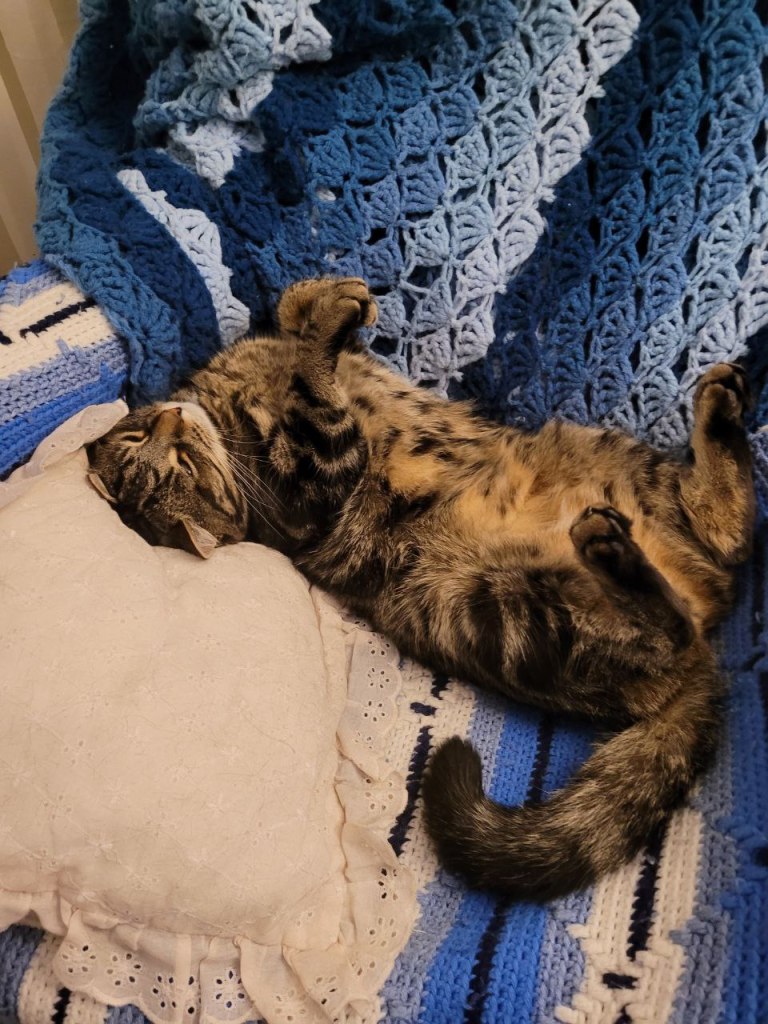
I look forward to being back in my house, hanging out with Tracy, and snuggling with my cat (Jaks). I look forward to eating home cooked meals, watching Christmas movies, and sleeping in my own bed. I look forward to … well, I could go on and one but you get the picture.
Since the last blog post my blood counts have been steadily increasing and it is now clear that engraftment is taking place. One of the immediate impacts – my mucositis has subsided and eating is no longer so painful!
My medical team is pleased with my progress and believes that I should be ready for discharge early next week. We’ll wait until after the weekend to make a final decision but it is looking very hopeful that I’ll be home for Christmas.
Not to be pessimistic or to be seen as less than grateful for progress to date but I still have many challenges yet to face. In the immediate future, it is highly likely that I will have to deal with graft vs. host disease (GVHD) [I will write more about GVHD in a future blog post].
GVHD can manifest itself in many ways, some more serious than others. After my first transplant I had skin rash over most of my body. I was on a steroid for many months to treat the rash.
There is no way predict when or how GVHD will manifest. Further, my medical team has taken deliberate steps to encourage GVHD as there is evidence that GVHD can also include a graft vs leukemia (GVL) effect that can deal with any remaining cancer that might have escaped chemotherapy.
While GVHD is a near certainty, I am not going to worry too much about it right now. Instead, I am going to celebrate engraftment and look forward to enjoying the holidays at in the comfort of my home.
The contents of this blog post include explicit descriptions of the various transplant side effects I am experiencing. I worried about straying into TMI (too much information) territory but decided, in the end. to continue to be as open and transparent about my journey as possible. Proceed with caution.
I woke up this morning feeling “human” for the first time in three days. I had a shower and, since the COVID lockdown has been lifted, took a walk around 5 West. It felt good to stretch my legs after more than a week of lockdown.
So, what transpired in the previous three days? It started several hours after my last post. That day I had received my last dose of post transplant chemotherapy (Methotrexate). Afternoon vitals revealed an elevated body temperature. Throughout the evening my body temperature continued to rise, finally spiking at 39.5C.
Fever broke very early the next morning. Unfortunately, that wasn’t the end of my discomfort. Several hours later diarrhea started. The acidity of the diarrhea further irritated my already inflamed hemorrhoids making each bowel movement excruciatingly painful.
Once I finished voiding my bowels, T+12 was a quiet day. I slept on and off the entire day.
Diarrhea returned on T+13. Since the diarrhea consisted of multiple movements, I got to experience a burning pain over and over again for nearly an hour. Oh, did I mention that I had to get a stool sample during this bout of diarrhea? (and yes, it is about a pleasant a task as it sounds). Seems that the type treatment depended on whether I had contracted C.difficile.
Fortunately, I had not contracted C.difficile and was put on Imodium. I have not had a movement since then. Not sure if that means that diarrhea has been treated or I have just been granted a temporary reprieve. My fingers are crossed.
I know that last this post and the previous post contained considerable “poop talk” (a term coined by one of my kids). This focus is representative of how I felt during that period and the nature of the conversations with medical team. My whole world became about finding ways to mitigate the pain and “curing” the diarrhea.
While I have spent considerable “ink” on this topic, I want to be clear that at no point in the past few days did I feel sorry myself. Before agreeing to the second transplant, I made peace with the fact that I will experience a variety of side effects that, at the very least, are uncomfortable and, in many cases, painful.
The contents of this blog post include explicit descriptions of the various transplant side effects I am experiencing. I worried about straying into TMI (too much information) territory but decided, in the end. to continue to be as open and transparent about my journey as possible. Proceed with caution.
As I mentioned in an earlier blog post, there are variety of side effects associated with the stem cell transplant process. In my case, two side effects have kicked in over the past week: mucositis and constipation.
As described in the blog post entitled “T+5 (Quick Update)“, mucositis is the inflammation of the mucosa, the mucous membranes that line the entire gastrointestinal tract including the throat and the mouth. The mucositis is sufficiently advanced that eating is quite painful. My food choices are best summarized as “soft and bland.”
What does the mucositis feel like? In the throat it is reminiscent of a bad sore throat. The mouth, on the other hand, is a mix of mouth sores (very painful) and tender gums. Any contact with food that is not smooth and soft is excruciating. Similarly, any level of spice or acidity makes my mouth feel like it is on fire.
I am determined to continue to eat and to minimize weight loss. Tracy is helping by bringing me food that is both appealing and easy to swallow. Examples include smoothies, rice pudding, regular pudding, and plain pasta. I combine the pasta with broth to make a simple, easy to swallow soup.
If I eat slowly, using small bites and frequent sips of ice water, I am managing to consume reasonable quantities of food. Each meal takes nearly an hour but, since I really don’t have anyplace to go, it really doesn’t matter.
While constipation is uncomfortable, it is what happened when I passed several very solid stools that is real problem. Passing these stools inflamed several small hemorrhoids that normally cause me no problems. Based on my experience during the last transplant process, I expect that the hemorrhoids will remain inflamed for several weeks.
Not only are the inflamed hemorrhoids painful, but, they are also so swollen that I am experiencing a small amount of anal leakage. The little bits of stool that leak end up trapped in the hemorrhoid. I have woken more than once over the past few nights feeling like my butt was on fire!
Through trial and error during the last transplant process, I devised a method of quickly cleaning the hemorrhoids and anus that does not further inflame them. Once clean, an application of lidocaine cream quickly eliminates the burning sensation.
In addition to dealing with the hemorrhoids and constipation, I am also receiving periodic transfusions to deal with the loss of red blood cells and platelets. More about transfusions in a future blog post.
So far, the side effects that I am experiencing can be best classified as “annoying discomfort.” Further, they were expected and I was prepared mentally to deal with them. With any luck, the side effects will remain in the discomfort category.






 The Cancer Card