A bone marrow biopsy early this summer showed no signs of cancer, normal bone marrow function (producing all there blood cell types (red, white, and platelets), and 100% donor DNA.
Bottom line … I’m in remission and the transplant was successful.
I’m not yet out of the woods with respect to cancer recurrence but my odds are much better than they were two years prior to the second transplant.
Thanks everyone for your prayers and positive thoughts. I truly believe that they have made a difference.
My mother-in-law and I text every day. She started texting me when I was first diagnosed with leukaemia and hasn’t missed a day since. Generally, a short text about what she and my father-in-law are doing, pictures of the garden, or an update on the latest puzzle they are working on.
About this time last week I replied to her daily text with a complaint about a task that I dislike immensely. Her first reply was to commiserate, saying that she hated this task as much as I did. Her follow up text, however, felt as though she had reached through phone and given me a firm shake.
My mother-in-law reminded me that how no matter how distasteful the task, I was healthy enough to do it, and had the financial wherewithal to pay for it.
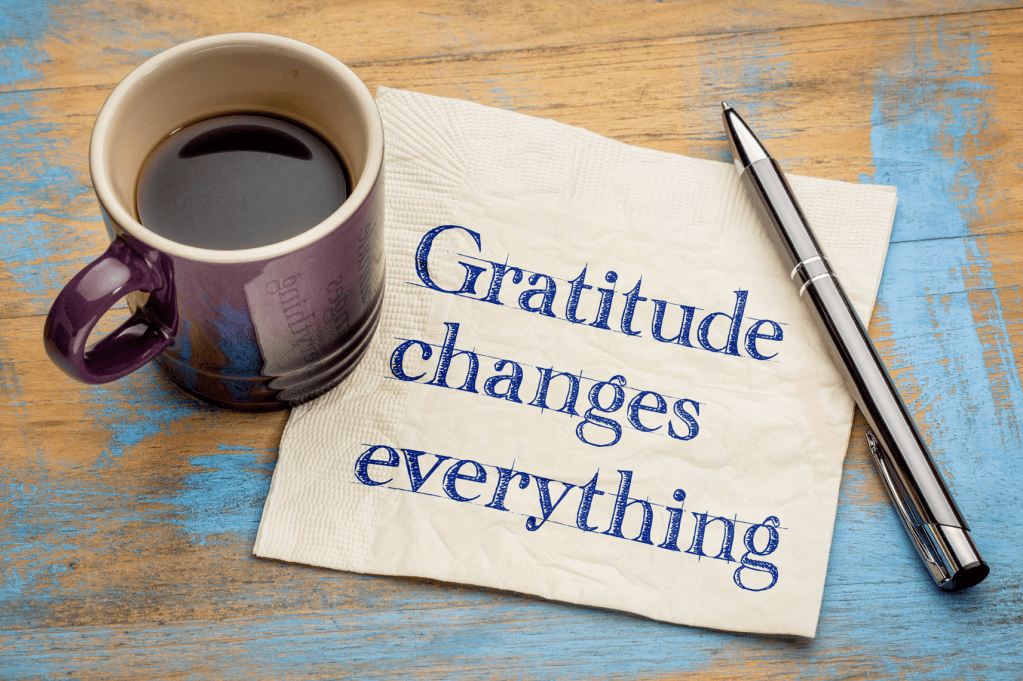
Gratitude. Just reading my mother-in-laws words changed my whole perspective that day. The task was still a chore to be completed. But … at least I was able to (that had not been the case many times in the past 4 years). Keeping this perspective in mind made a huge difference.
Thanks for listening (and thanks Mom for the daily texts)
During the mid 2010’s I was employed by The Ottawa Hospital (TOH), the same hospital at which I am now receiving treatment for my leukaemia. Although I was hired on a temporary contract to manage a provincial digital health project, I was required to go through the same orientation as any other employee. I vividly remember the opening presentation by then TOH CEO Dr. Jack Kitts.
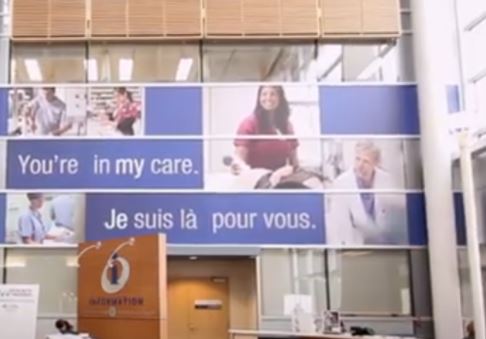
In addition to welcoming new employees to the organization, Dr. Kitts presented TOH’s mission, vision, and core values. I was particularly struck by TOH’s vision: treat each patient like you would a member of your family. The goal is to communicate to patients through your actions the message “You are in my care.”
Every employee, from the doctors to the nurses to the housekeeping staff can relate to this vision. They can easily envisage how their work might impact their Mom, Dad, or grandma. Little did I realize at the time that I would benefit from the attitude that the TOH vision engendered.
During my hospital stays last year, I would have bad days when I was either very uncomfortable or even in pain. On one of those days, I asked the nurse for medication to address my discomfort including a pain killer. After taking my vitals and giving me my medication, the nurse patted me gently on my leg and told me that I’d be OK. I immediately recalled Dr. Kick’s presentation and TOH’s vision and realized that I felt in this nurse’s care.
The next day, when the nurse came by to take my vitals, I told her that I found her simple action extremely comforting. I asked her whether any patient had commented on her use of a gentle touch to communicate empathy and compassion. When she said “no”, I told her that this simple gesture was a powerful way to connect with a patient and to continue doing it. Tears soon welled up in her eyes (as they did mine) and she managed a weak “thank you.”
Over the next several weeks I made it a point to notice the different ways in which each nurse expressed the TOH vision. I’d then share with them what I observed, explain how much their action meant to me, and encourage them to continue doing it. Tears were shed on more than one occasion.
I’m an ardent believer in the power of technology to transform healthcare, not by replacing healthcare professionals but by giving them the time to make me feel that I am “in their care.” I am grateful for the compassionate care I have received from each and every healthcare professionals I have encountered. I hope that in my professional life I can help them spend more time interacting with patients.
As I mentioned in my last post, several of the gastrointestinal GVHD problems that I experienced last year have returned. My medical team put me back an Entocort, a drug used to treat mild to moderate Crohn’s disease and has ordered several tests to determine whether the GVHD had returned. They have also put me on a bland diet.
Since starting the Entocort and the bland diet, I am feeling better. Bowel movements are not yet back to normal but the cramps accompanying the bowel movements have subsided.
It has been about 6 weeks since my second stem transplant. All test results indicate successful engraftment of the new stem cells. I have put back on the weight I lost due to the gastrointestinal GVHD; I bottomed out at about 125 lbs.
Over the past few months my medical team has started to wean me off the various medications, both preventative and curative (for the GVHD). Over the past few weeks, some of my gastrointestinal symptoms have returned. I am wondering whether they weaned me off one of my GVHD medications too early. I have an appointment with my team next week and will discuss the matter with them.
I have now entered the same time period post transplant that I was at when my cancer recurred after the first transplant. For the most part I remain optimistic but, some days, it is hard to ignore the statistics for second transplants:
Chance of cancer recurring within two years of transplant: 50%
Overall 5 year survival rate: 25%. Note that even if the cancer doesn’t return, I am susceptible to other cancers as well as complications due to the toxic crap I have dumped into my body to battle the cancer.
My sister (a nurse) tells me that my bloodwork looks different this time and that I should expect different results. I figure that someone has to be in the 25% who survive, why not me?
Thanks for listening. Also, thanks for your continued prayers and good thoughts. As “touchy feely” as it might seem for an engineer to say, I can feel your good vibes and appreciate them more than I can adequately express in words.
I was out for dinner last night with friends, one of whom is an avid reader of this blog. She told me how much she enjoyed and learned from my blog posts. Her comments got me to thinking about why I haven’t posted in so long.
I have always had a love/hate relationship with writing. When I graduated high school I received both the math award and the English award for highest marks, an unusual combination. Having only recently been bitten by the writing bug (I had just started to feel comfortable writing in grade 10), I decided to pursue an English degree.
While I enjoyed my first year courses, a summer job in CBC’s engineering labs ignited what has become a lifelong interest in technology. A programming course solidified that interest and I changed career paths, pursuing instead an engineering degree.
Although I was a good software engineer and was particularly adept at debugging, it didn’t take long for people to discover that I excelled in an area that many engineers do not … the ability to pitch ideas, to tell a story, and to articulate my thoughts in various written forms.
Throughout my career I have had many opportunities to prepare written documents, from lengthly proposals to articles in trade journals. I often joke that I am a semi-professional writer … I have been published but never paid.
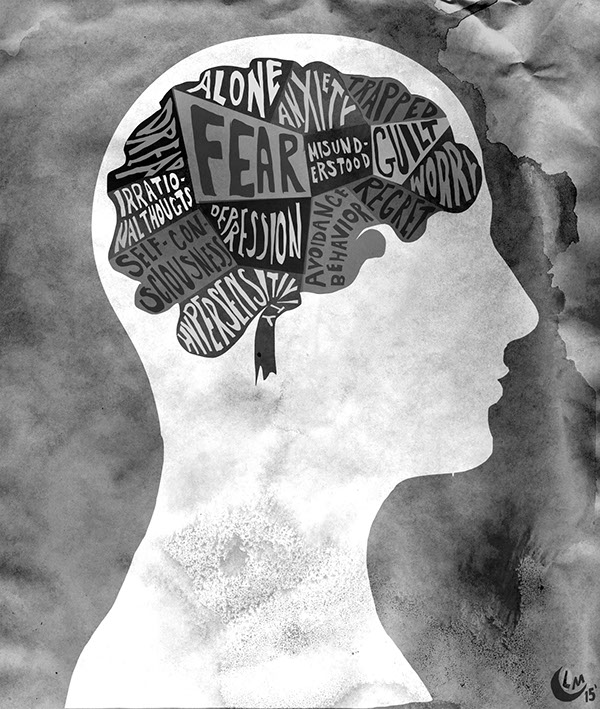
Writing makes me anxious. I worry about what people will think about what I have written. I imagine all sorts of negative reactions. I fear that people will be unmoved or unconvinced by what I have written.
Despite my anxiety, I enjoy the process of using words to tell a story. I love the feeling I get when I come up with a particularly clever turn of phrase. I almost always derive great satisfaction when I put the finishing touches on an article or blog post. I just dread the process.
My friend’s feedback at dinner last night has encouraged me. I still have much I want to say about my cancer journey … indeed, I have written / rewritten a number of blog posts in my head over the past few months. I just need to type them and publish them
Thanks for listening. Special thanks to those of you who have offered positive feedback.
I am currently attending a work related conference. This conference is the first work related event I have attended in about a year (I started self-isolating about 6 weeks prior to my transplant).
I had the opportunity over the past two days to meet a number of blog readers and I am, to say the least, overwhelmed by the positive feedback I received. A great big “thank you” to all of you for following my journey.
This positive feedback has encouraged me to consider blogging more often. If there some particular aspect of my journey about which you’d like to ask questions, please don’t hesitate to leave a comment or contact me directly.
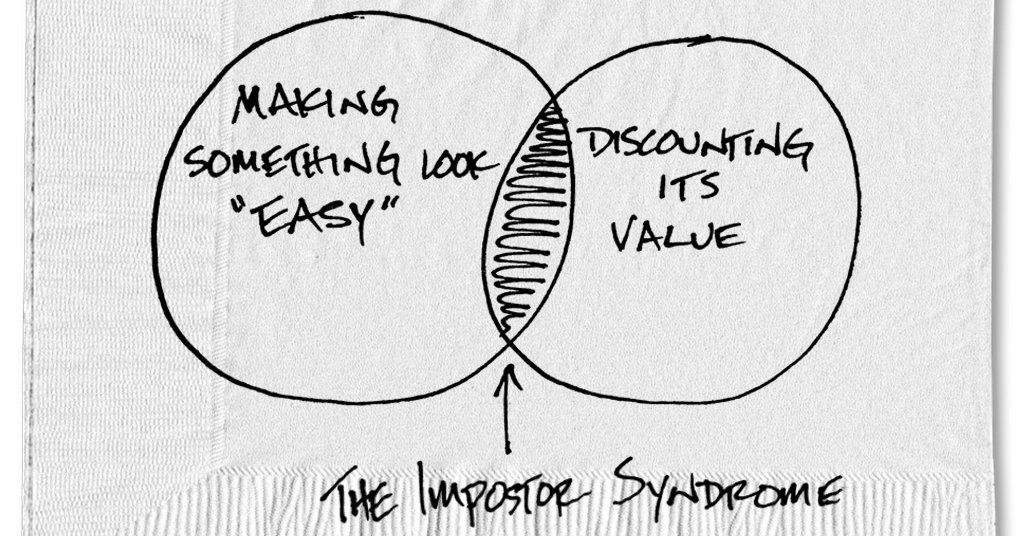
WebMD characterizes “imposter syndrome” as doubting your own skills and successes. They state that when you suffer from imposter syndrome “you feel you’re not as talented or worthy as others believe, and you’re scared that one day, people will realize that.”
When I first started this blog, I was overwhelmed by and grateful for the many expressions of support. What surprised me, however, was my reaction to comments such as “You got this”, “You are so brave”, or, “You are such an inspiration.” The more of these comments I received, the more hesitant I became to continue blogging. I didn’t feel worthy of the adulation … I felt like an imposter!!!
As much as I felt like an imposter with every blog post I wrote, I have been feeling an ever increasing desire to continue blogging. There is much I want to share as a digital health advocate turned patient.
My initial reaction on reading that people felt that I was “courageous” or “strong” is “what choice do I have?” Winston Churchill summed my perspective in one simple sentence “If you’re going through hell, keep going.”
I was certainly going through hell, particularly with the second transplant, so the only pragmatic response in my view was to face each day in as positive a manner as I could muster. As Churchill also observed, “attitude is a little thing that makes a big difference.”
Eddie Rickenbacker, the most successful and decorated American pilot of World War I, claimed that “courage is doing what you are afraid to do. There can be no courage unless you are scared.”
As I tried to reconcile my feelings that I was an imposter with an increasingly strong desire to continue to blog about my situation, I realized that I was mustering a positive attitude despite being very, very scared. This realization shed a different light on how I viewed courage.
I still feel somewhat uncomfortable being told that I am brave or courageous. However, not enough to stop blogging. More importantly, hearing that I have inspired someone in some manner encourages me to continue to blogging.
My wife, daughter, and I are reading “How to Be Sick: A Buddhist-Inspired Guide for the Chronically Ill and Their Caregivers.” We are doing so to facilitate a discussion about our respective roles as patient and caregivers as well as equip us with new tools and perspectives for how to deal with the situation in which we find ourselves.
As I read the book, there is much to unpack and think about. I draw comfort from reading about the author’s similar experiences and emotional reactions. In particular, I was struck by her simply yet plaintive expression of pain and frustration that waiting can engender. Indeed, as the author notes, the cancer journey is filled with waiting periods, whether it be for a specific test, the results of that test, the follow up appointment with various specialists to discuss the test results, etc.
When people ask me how I’m doing, I tell them that the BIG WAIT has started. While the second transplant appears to be successful, we don’t know whether the chemo prior to the transplant or any of the Graft vs Host Disease (GVHD) attacks eradicated the cancer cells. All we can do now is wait and see whether the cancer recurs like it did after the first transplant.
The odds of recurrence are not in my favour. On the order of 2/3rds of second transplant patients will suffer a relapse within two years of the transplant.
Despite the odds, I feel cautiously optimistic. I am recovering slowly but steadily from my various hospital stays including a precipitous weight loss (I bottomed out at 125 lbs). Good news is my appetite is voracious. Tracy makes sure that there is always something available to eat that will appeal to me.
I still tire easily and weight gain seems glacially slow some weeks. The steroids weakened many of muscles so physical activity is needed to rebuild these muscles.
Although I am in hospital (and have been for over 3 weeks), I still go to work Monday to Friday. I am lucky that I can work remotely (and have done so for 5+ years). Essentially, I just moved my desk from home office to hospital room.
Why not take time off while in hospital? I have been asked that question a number of times. Initially, my answer was “Because it keeps me busy during the day.”
As an introvert, I am prone to introspection and questions such “why are you still working” get my thinking. In pondering this question, I realized that what makes work so important to me and why I continue to working is that it is “normal”.
There is little about my situation that is any way normal. Much of what happens to me is entirely out of my control. From 9 to 5, Monday to Friday, I am “Mike @ work”, not “Mike in hospital” or “Mike with cancer”. My contributions at home are significantly reduced and I am still very uncomfortable asking family and friends for help (a topic for separate blog post).
The situation at work is completely the opposite. I continue to make the same contributions and offer the same value that I did before cancer. My cancer imposes few if any limitations and I can easily work around any that present themselves (e.g. attending medical appointments).
“Normal”, in whatever form it might takes, is a precious commodity these days. Whether it is going to work every day, taking a regular shower, or even just doing my Wordle every morning, I revel in these moments that I can engage in an activity that I did BC (before cancer).





 The Cancer Card