T+9 (Hospital Food)

Patient 1: “What are you in for?”
Patient 2: “I ate hospital food”

Hospital food is an easy target for comedians and cartoonists. I’ve yet to meet anyone who didn’t have some complaint about the food they were served while in hospital.

After my previous hospital stay I had many complaints about the food service and shared them (often loudly) with friends and family. I was going to use this blog to share these complaints but, the more I thought about it, the more I realized that it might be more insightful to explore why I felt the need to complain.

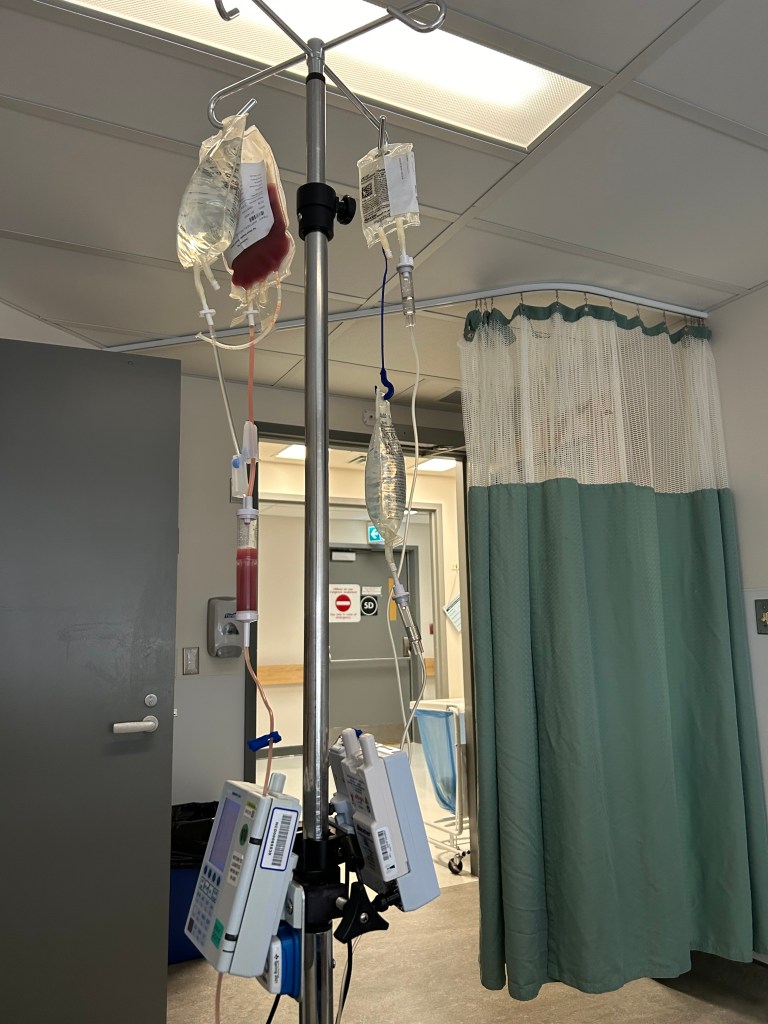
While in hospital, there are few aspects of what happens each day over which I have much control. Vital signs every four hours. Blood drawn once before breakfast and once after breakfast. Pills to take throughout the day. Transfusions every 2 to 3 days. Various unpleasant side effects such mucositis and constipation.

The loss of control extends to the food service:

  • Meals are served at the same time each day (8am, noon, 5pm). There is no flexibility. This lack of flexibility is particularly annoying at breakfast and dinner time. I’m used to having breakfast shortly after I wake up, which is generally before 8am. Similarly, I usually eat dinner closer to 6pm and sometimes later.
  • Food choice is limited. Each day there are very limited choices for each meal. For example, at dinner, there are three appetizer, two entree, and two dessert choices. These choices change each day. If I happen to like one of the meal choices, I have to wait until it next appears on the menu. If I don’t like any of the choices, I end up having to choose the selection that I dislike the least.
  • Meal selections are made a day in advance. If I wake up feeling different than the day before (more pain, gastric distress, etc), I am stuck with the choices I made. This restriction is particularly noticeable at breakfast. I am used to having a choice of breakfast items (cereal, muffins, bagels, etc) from which to choose based on my mood and how I am feeling when I wake up.

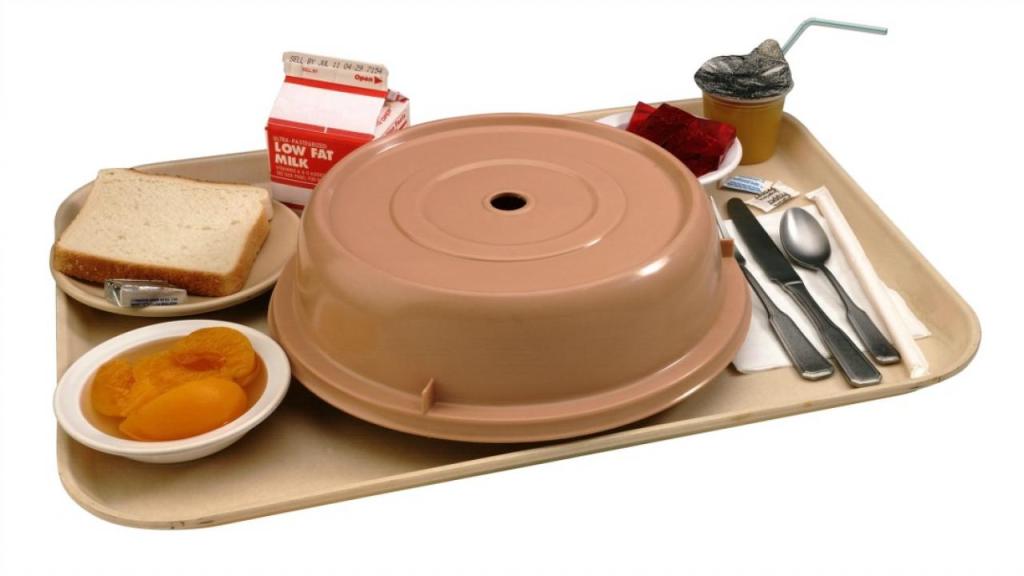
Not only are meals served at the same time every day, but the presentation is reminiscent of a high school cafeteria. The meal arrives on a tray. Drinks (milk, juice, etc) are served in their containers. Coffee or tea is served in a small plastic cup and arrives, at best, warm, and generally lukewarm.

Presentation is an important aspect of making food appealing. I am reminded at every meal that I am confined to a hospital room.

On a positive note, the food arrives consistently hot, a change from the last time I was in hospital. Quantities are reasonable. Tableware is stainless steel, not plastic. The people delivering the food and collecting the trays are pleasant and almost always serve the meal with a smile.

I have purposely not made any specific recommendations for change. There are too many factors about which I am not aware to do so. I simply wanted to offer a perspective of the food service from my side of the meal tray.

Thanks for listening,

Mike
T+8 (Pain Scale Rant)

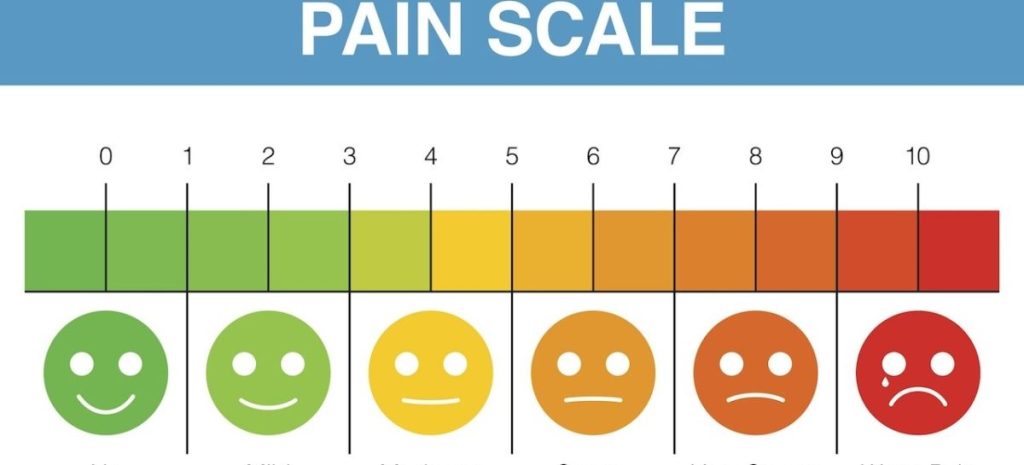
One of the questions I am asked almost every time a nurse or physician visits my room is “How is your pain on a scale of 1 to 10?” I hate this question and stumble every time trying to answer it.

When I was first asked the question, I had to ask “What is the unit of measurement?” (I am an engineer … anything that is measured has a unit of measure!). I got a quizzical look after which I was told “0 is no pain and 10 is the worst pain you ever experienced.” This response didn’t help me much.

Why do I struggle so much to answer what is seemingly a simple question? Because I find it nearly impossible to compare my current pain to yesterday’s pain unless there is a considerable change. Further, I can’t remember what my worst pain felt like, much less compare my current pain to it.

Over the past three years I have been poked, prodded, scoped, and scanned. Each of these examinations and tests generated either an objective measurement or the subjective assessment of an expert. I appreciate that there is no similar objective measure of pain and that my medical team is trying their best to manage my pain. I ask that they bear in mind that what is seemly a simple question is quite difficult for me to answer.

Thanks for listening,

Mike

T+7 (Pain Management Update)

As mentioned in my last blog post, one of the side effects of the stem cell transplant process is mucositis. For me, it affects both my mouth and my throat. The inflammation that characterizes mucositis is quite painful. Chewing and swallowing irritates the inflammation which makes eating more of a chore than a pleasure.

I enjoy eating, more so that I am confined to a hospital bed. Equally important, I am losing weight (about 5 lbs since entering hospital) so I need to maintain a decent caloric intake. Hence, pain management is not only about comfort but also about making eating less of chore.

The past two days have been spent putting in place a pain management plan. The typical “go to” medications make me feel groggy (I only felt alert enough to write this short post after 3pm). During my last transplant process we settled on Fentanyl patches as the pain medication of choice.

My medical team approved use of Fentanyl patches yesterday. My first patch was applied late yesterday morning. Now, we need to determine if the dosage is appropriate.

Today, the pain was reduced but not to a sufficient level. We supplemented the Fentanyl with Dilaudid® and morphine, both of which make me feel groggy. The combination did reduce the pain to a tolerable level. Based on this information, my medical team will hopefully adjust the fentanyl dosage tomorrow.

I look forward to getting the appropriate fentanyl dosage. I have several projects that I planned for my hospital stay (this blog is one of them) and I’d like to have a clear head so I can work on them.

Thanks for listening,

Mike

T+5 (Quick Update)

One of the most vivid (not in a good way) memories from my first stem cell transplant was the pain caused by mucositis. A common side effect of chemotherapy, mucositis is the inflammation of the mucosa, the mucous membranes that line the entire gastrointestinal tract including the throat and the mouth.

The mucositis was so bad during the last stem cell transplant process that I ended up on a liquid diet for about a week. It was simply too painful to swallow anything remotely solid. Not surprisingly, I have been dreading another bout of mucositis.

Shortly after lunch yesterday my throat started ache. By dinner time the ache had escalated to an uncomfortable level of pain. Shortly after dinner, I buzzed the nurse and asked for assistance managing the pain.

Pain is managed using a combination of medications. One of these medications is a special mouthwash developed by the TCT pharmacists … they refer to it as “Magic Mouthwash”. What is so magical about it? One of the key ingredients is Lidocaine, a local anesthetic. “Magic Mouthwash” provides instantaneous relief.

In addition to Magic Mouthwash, I also take more conventional pain medications as needed. The usual go-to is hydromorphone (known by many people by its brand name – Dilaudid®). I didn’t care how hydromorphone made me feel during the last transplant process and ended up on Fentanyl patches. I have started discussions with the medical team about doing the same this time around.

Time for a nap 🙂

Thanks for listening,

Mike

T+4 (Brain Fog)

My sister Celina visited earlier this week. Spending time with her is like hanging out with an old friend. Conversation flows easily and, given our respective competitive personalities, she is always up for a board or card game.

During Celina’s most recent visit we played Yahtzee. In keeping score, I noticed that it was taking me longer than usual to add a column of numbers. Since I make it a point to do mathematical calculations by hand whenever possible, the struggle to keep score was both noticeable and frustrating.

Often referred to as “brain fog”, what I am experiencing is not unusual given the number and variety of medications I am taking. In addition, as mentioned in earlier blog posts, my blood counts are rapidly decreasing and won’t recover until after engraftment. The drop in red blood cells in particular causes fatigue which in turns makes it harder to think clearly.

While it isn’t debilitating, the brain fog is extremely annoying as it gets in the way of the few activities that I can do while stuck in my hospital room. I enjoy reading but can only do so for short periods of time before I can no longer focus on the words in front of me. I derive considerable satisfaction from writing but I am challenged to write short blog articles. Even watching television can be an effort.

The brain fog will eventually pass. Just not soon enough 🙂

Thanks for listening,

Mike

T+3 (Home Away from Home – Part 2)

As discussed in yesterday’s blog post, Tracy and I chose the inpatient option for the stem cell transplant process. As long as there are no major complications and the engraftment takes place, I should be home before the end of the calendar year.

The inpatient unit for The Ottawa Hospital TCT program patients is called “5 West” (5th floor, west wing). Each patient on this unit gets a private room as we are all immunocompromised in same way. I was going to walk around and count the number of rooms for this blog post but, since I’m stuck in my room under COVID lockdown, I estimate that there are approximately two dozen rooms.

UPDATE: A TOH representative reached out to inform me that there are 20 private rooms and 13 day hospital beds

There is nothing particular special about the hospital rooms … they appear to be the same as most other hospital rooms I have seen. I am fortunate, particularly given the COVID lockdown, that I was assigned what used to be a double room. The additional size makes my captivity a little easier to take.

When Tracy and I reached the conclusion that an inpatient stay in hospital was the best course, we started kicking around ideas for how to make my stay as comfortable as possible. The ideas encompassed clothing, food, lighting, and entertainment.

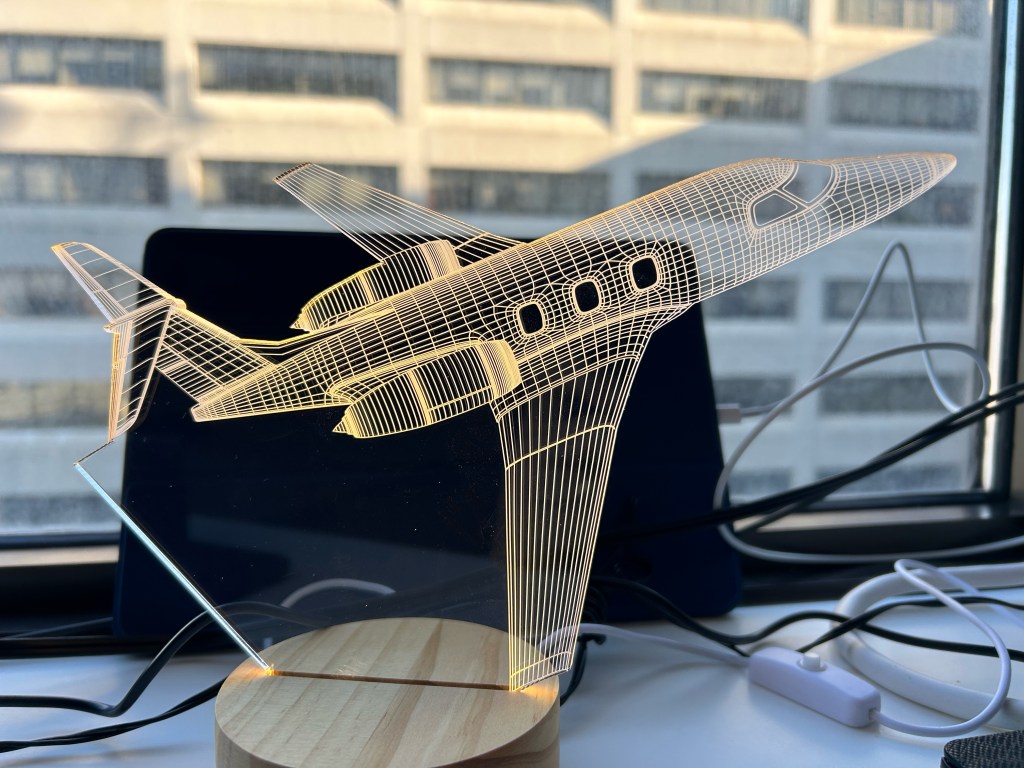
One notable example of a creature comfort is the desk lamp in the picture below. This light, a birthday gift from Tracy, is a welcome alternative to the overhead fluorescent lights, particularly in the evenings. It has become quite the conversation piece among the medical staff.

Another example is an electronic picture frame. I loaded it with pictures that remind me of happier times. I look at it frequently and, so far, doing so has not yet failed to elicit a smile. As a bonus, it is a great conversation starter with the medical staff who drop by room throughout the day.

Thanks for listening,

Mike

T+2 (Home Away from Home – Part 1)

For patients residing in eastern (and, I believe, northern Ontario), allogenic stem cell transplants (the type I am receiving) are delivered by The Ottawa Hospital’s Transplantation and Cellular Therapy (TCT) Program. This program operates from the General campus of The Ottawa Hospital.

The TCT program offers patients two options when undergoing a stem cell transplant: reside as an inpatient on “5 West” or enroll in the “day hospital” program. Since the day hospital program makes it possible for patients to sleep in their own beds each night, I jumped on the day hospital program for my first stem cell transplant. My wife, Tracy, agreed to support this arrangement.

While the opportunity to return home every day is very appealing, the reality, for us, turned out to be less attractive. As we live outside Ottawa, the one hour (in light traffic) car ride back and forth each day was tiring and, on some days, downright uncomfortable. The distance also made for several late night, nerve wracking rides to the hospital when I spiked a fever and needed to be seen by the TCT program team. In addition to the transportation challenges, I also ended up as an inpatient (twice) during the transplant process to monitor for possible complications.

Once we made the decision to proceed with a second transplant, Tracy and I quickly shifted our discussions on whether to go the day hospital route or check me into hospital as an inpatient. While the thought of being confined to a hospital room for a month or so filled me with dread, the challenges that we encountered trying to make day hospital work could not be overlooked. Equally important, a second stem cell transplant is riskier and the possibility of complications is higher.

It took several weeks to get my head around the thought of living on “5 West” for about a month. Eventually, I decided to do so. This decision was heavily influenced by several factors:

  • Impact on Tracy. The emotional and physical toll that the caregiver role extracts is immense (I’ll explore my thoughts on this matter in a future blog post). Anything that I could do to make the transplant process easier on Tracy was a “win”.
  • Peace of mind. The possibility of complications quite frankly scares the hell out of me. We had several scares during the first transplant process that resulted in mad dashes to the hospital. We both agreed that we could both do without the excitement and would both rest easier knowing that help was immediately available.
  • Great staff. To a person, the healthcare professionals we encountered during my previous stay on “5 West” were empathetic, caring, and, clearly passionate about delivering exemplary care.

Tomorrow, I’ll describe life on “5 West”

Thanks for listening,

Mike

T+1 (COVID!!)

Today started out quietly enough and was shaping up to be an uneventful day. My sister was driving up from Montreal to hang with me for the day. We planned to chat, have lunch together, and play board games.

My sister arrived mid morning and the remainder of the morning unfolded as expected. As we were getting ready for lunch, we got word that there was a possible COVID outbreak on the unit and that testing would take place in the afternoon. Shortly thereafter, my nurse stepped into my room and announced that all visitors for the next few days would require full PPE.

OK, not too bad I thought. Full PPE, while uncomfortable, would not deter the people who were planning to visit me over the next few days. My sister and I finished our lunch and broke out a board game. Then, the other shoe dropped! The Unit Manager dropped by to inform me that the unit was going on full COVID lockdown.

For the next 7 days, I can have one named visitor who be screened before entering the unit. Further, I am restricted to my room … I can’t walk the halls of the unit for exercise.

I’ll admit I’m a little bummed as I had lined up daily visits by several good buddies who planned to bring whatever treat I might be craving that day. Oh well, all part of the journey, I guess.

Thanks for listening,

Mike

T-0 (Stem Cell Transfer Day)

Today is the day that stem cells from an undisclosed donor will be transferred into my body. This transfer represents the START of the transplant process. As mentioned in a previous blog post, this process differs considerably from solid organ transplant (e.g.. heart, liver, kidney, etc.) in many ways. This difference and how it impacts my perspective on my situation is, I am beginning to realize, one of the reasons I felt compelled to write this blog.

A key aspect of the difference is the length of time that it will take to determine whether the donation is working in the recipient’s body. With a solid organ transplant, the results are generally known, if not immediately, certainly within hours. That is not to say that is functioning optimally or that will not subsequently fail. But … there is an immediate indication of at least early success.

In the case of a stem cell transplant, there are no significant changes to be observed in the period after the stem cells have been transferred from the donor to the recipient. These cells know where they belong in the body (this fact alone blows my mind) and, once injected in the recipient’s bloodstream, make their way to the recipient’s bone marrow. Once in the bone marrow, these cells begin to grow and make new blood cells … this process is called engraftment.

With my first stem cell transfer, the engraftment took a little over three weeks. According to other documents I have read, engraftment can take up 30 days. Once engrafted, the marrow resumes is normal function of producing various blood cells, starting with white blood cells followed by red blood cells and platelet. Possible complications that might occur during engraftment are described in blog post https://cancercardsite.wordpress.com/2023/11/26/t-2-1st-rest-day/

The production of blood cells marks the end of transplant and the beginning of the recovery phase. While I’ll speak more to the recovery phase in future posts, I want people to know that it is the recovery phase that will be most nerve wracking for me. Not only is there is the distinct possibility of serious complications, the likelihood of another relapse is as high as 50%!!!

I know that I am making a big deal about describing the transplant as a “process” (rather than a specific event) and to seemingly downplay today’s stem cell “transfer” event. I do so because I have been her before and have found myself in a position to have to do it again. The possibility that history could repeat itself scares the hell out of me. Hence, my very cautious optimism.

Thanks for listening!

Mike

P.S. Stem cell transfer has started!!

Thank You and An Apology

Thank you, thank you, thank you for the outpouring of support from family, friends, and professional colleagues. I am quite simply blown away by how many of you are taking the time to send messages of support. I am touched and feel truly blessed.

Many people have noted that they had no idea that I had been ill for 2+ years. That’s because I didn’t want many people to know. Why? A good question for which I’m not sure I have a satisfactory answer. Best I can up with:

  • I didn’t want to be treated differently or, worse yet, be pitied.
  • I didn’t want to be that “friend who has cancer”
  • I didn’t want anyone to feel that I couldn’t live up to my part in any relationship (personal or work).

What changed? Again, I’m not entirely sure. Partly, I was not really comfortable “lying” (by omission) to people about my condition. Partly, it was going to be harder to hide a second transplant. Most compelling, perhaps, there are several causes related to my disease that I’d like promote (e.g. blood donations … expect at least one full blog post on this topic).

For those from whom I have kept my leukemia a secret, I apologize.

Thanks for listening,

Mike