During the mid 2010’s I was employed by The Ottawa Hospital (TOH), the same hospital at which I am now receiving treatment for my leukaemia. Although I was hired on a temporary contract to manage a provincial digital health project, I was required to go through the same orientation as any other employee. I vividly remember the opening presentation by then TOH CEO Dr. Jack Kitts.
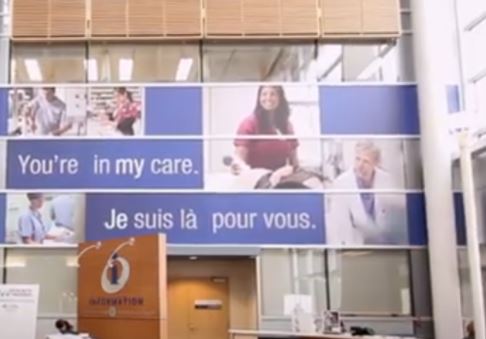
In addition to welcoming new employees to the organization, Dr. Kitts presented TOH’s mission, vision, and core values. I was particularly struck by TOH’s vision: treat each patient like you would a member of your family. The goal is to communicate to patients through your actions the message “You are in my care.”
Every employee, from the doctors to the nurses to the housekeeping staff can relate to this vision. They can easily envisage how their work might impact their Mom, Dad, or grandma. Little did I realize at the time that I would benefit from the attitude that the TOH vision engendered.
During my hospital stays last year, I would have bad days when I was either very uncomfortable or even in pain. On one of those days, I asked the nurse for medication to address my discomfort including a pain killer. After taking my vitals and giving me my medication, the nurse patted me gently on my leg and told me that I’d be OK. I immediately recalled Dr. Kick’s presentation and TOH’s vision and realized that I felt in this nurse’s care.
The next day, when the nurse came by to take my vitals, I told her that I found her simple action extremely comforting. I asked her whether any patient had commented on her use of a gentle touch to communicate empathy and compassion. When she said “no”, I told her that this simple gesture was a powerful way to connect with a patient and to continue doing it. Tears soon welled up in her eyes (as they did mine) and she managed a weak “thank you.”
Over the next several weeks I made it a point to notice the different ways in which each nurse expressed the TOH vision. I’d then share with them what I observed, explain how much their action meant to me, and encourage them to continue doing it. Tears were shed on more than one occasion.
I’m an ardent believer in the power of technology to transform healthcare, not by replacing healthcare professionals but by giving them the time to make me feel that I am “in their care.” I am grateful for the compassionate care I have received from each and every healthcare professionals I have encountered. I hope that in my professional life I can help them spend more time interacting with patients.
Thanks for listening.
Mike
 The Cancer Card